






Back-to-School Learn to Swim Guide for Kids
By Clark Rubber | 5th October, 2026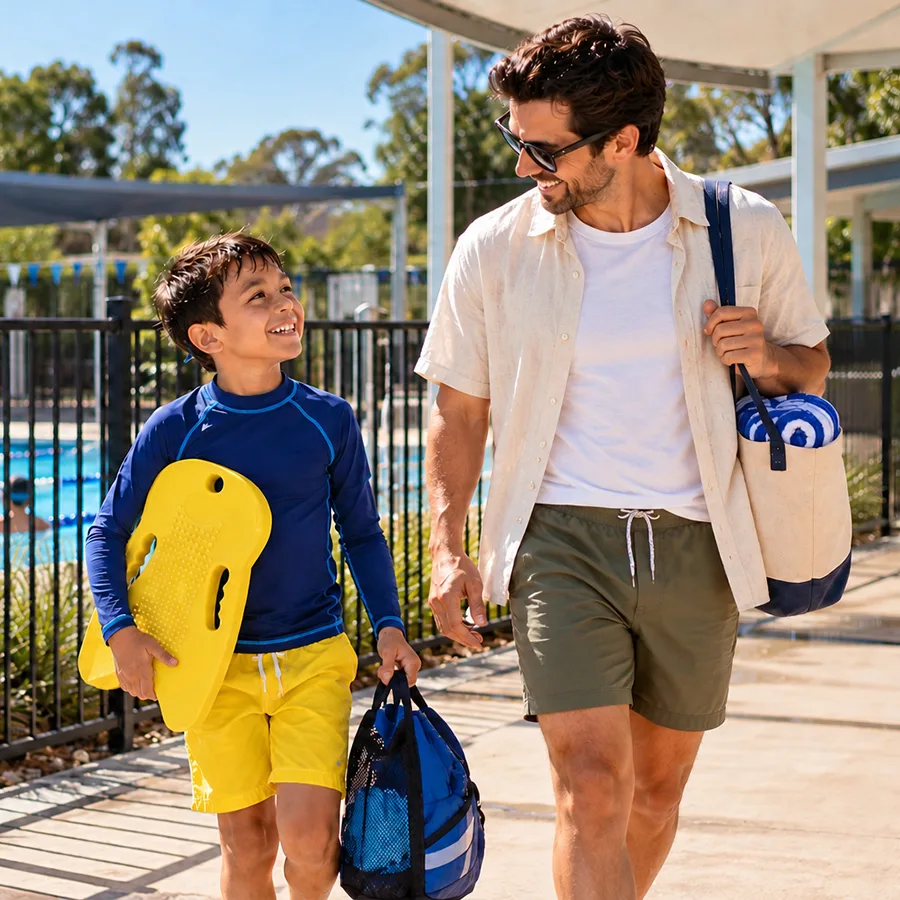
Summer holidays leave plenty of room for pool afternoons, with children splashing about and asking for one more swim before dinner. Then school goes back and that relaxed routine changes almost overnight.
For parents and carers, swimming lessons become another part of the school-week shuffle, with bags to pack and tired children to move from the classroom to the pool. A little preparation makes the return easier.
If you've only recently started looking at learn to swim equipment, the number of products can be confusing. Kickboards and flotation aids can look similar despite doing different jobs, and your child won't need every product on the shelf.
This guide helps choose suitable learn to swim equipment for your child and understand how each item supports their lessons. It also covers practical ways to make the return to swimming after the school holidays easier for the whole family.
Start With What the Lesson Requires
It is easy to assume that swimming lessons call for a long list of specialised gear. In practice, children usually need well-fitting swimwear, goggles if the centre recommends them, a towel, and something dry to wear afterwards. Younger swimmers may also need a swim nappy or a parent in the water, depending on the class.
Training equipment is more lesson-specific. Kickboards help children concentrate on their kicking or body position, while other aids may support a different activity. Not every class uses the same products, and many swim schools provide their own equipment.
Before buying, ask the instructor what your child will use and whether anything needs to be brought from home. This is particularly helpful at the beginning of a new school term, when your child may have moved into another class or started working on different skills.
Understanding the Learn to Swim Stages
The Learn to Swim stages make it easier to choose equipment that suits your child’s current confidence and swimming ability. There is no need to rush from one stage to the next.
- Stage A: Helps young children become familiar with the water through supportive, playful activities.
- Stage B: Supports children as they develop their swimming skills and become less reliant on flotation aids.
- Stage C: Introduces confident swimmers to activities that build technique, strength, and skills under the water, including kickboard drills and dive games.
Age can help narrow down the options, but it does not tell the whole story. Children of the same age may feel very different in the water and progress at their own pace. There is no wrong pace, so focus on your child’s current ability and check with their swimming instructor if you are unsure which equipment is suitable.
Read the full Clark Rubber Learn to Swim article for more information.
Check Last Term’s Gear Before Buying More
Children can grow quickly over the summer holidays. Goggles that fit well in spring may now pinch, while swimwear that looks fine when they are standing still can restrict shoulder movement in the water.
Set aside a few minutes before term starts to have your child try everything on, checking each item against its label for damage.
Pay attention to:
- Swimwear that fits incorrectly
- Goggle straps, seals, and nose bridges
- Kickboards with splits, sharp damage, or distortion
- Faded names on towels or bags
- Equipment that no longer matches their abilities and size
Replace what's damaged, outgrown, or no longer appropriate. Most of last term's gear will still work, so there's no need to buy a full new set.
What to Pack for Swimming Lessons
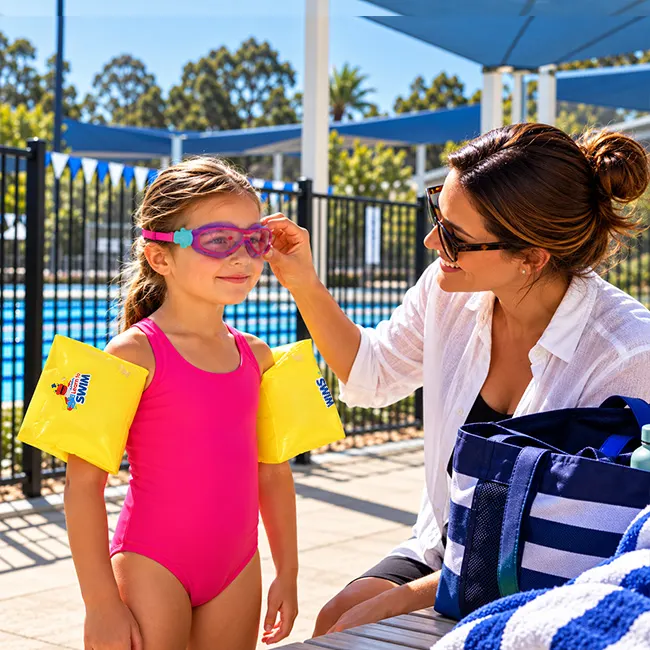
A small child shouldn't have to manage an oversized bag of unused gear. Pack what the swim school requests, plus the basics needed before and after class.
- Well-fitting swimwear. Ask your child to lift and move their arms while wearing it. For outdoor classes, follow the swim school’s advice about suitable sun protection.
- Goggles, if used during the lesson. Check the fit at home rather than adjusting them for the first time beside the pool.
- A named towel and dry clothes. Clear labels help when several similar towels end up on the same bench. Choose clothes that are easy for a tired child to put on after class.
- Training equipment requested by the instructor. For Stage C, this may include a child-sized kickboard.
- A separate wet bag. Keeps damp swimwear away from schoolbooks and anything else travelling home in the same bag. Store the packed bag in the same spot each week and return washed items promptly.
Once the everyday essentials are sorted, it helps to understand what lesson-specific equipment does and why your child may be asked to use it.
What is a Kickboard for?
A kickboard helps a swimmer concentrate on kicking and body position without coordinating a complete stroke. Because boards vary in size and shape, the right choice depends on your child’s reach, confidence, and lesson activities, not age alone.
Check out our favourites from the Stage C range:
Clarkee Learn To Swim EVA Kickboard
The Clarkee EVA Kickboard is intended for children aged three and over. Made from EVA, it measures approximately 44 × 31 × 3 cm and can be used for kicking drills. Its bright yellow colour is a practical safety feature that makes the board easier to spot in the pool.
As the largest featured option, it may suit children who are comfortable handling a bigger board. Compare its measurements with your child’s reach before buying.
Zoggs Junior Kickboard
The Zoggs Junior Kickboard measures 35 × 26.5 cm and is intended for children aged 3–12 years. Its finger cut-out provides a clear place to grip during lesson drills.
The broad age range is only a guide. Check that your child can reach the grip without straining their arms or shoulders.
Zoggs Zoggy Mini Kickboard
The Zoggs Zoggy Mini Kickboard is designed for children developing their swimming skills. Its child-friendly size and colourful Zoggy design make it a practical training tool for swimming lessons, helping young swimmers work on their kicking technique.
Ask your child’s instructor when they are ready to introduce a kickboard and how it should be used during practice.
Safety note: A kickboard is a training tool, not a lifesaving device. Children still need active adult supervision whenever they are in or around water.
Here’s what to consider when comparing the three kickboards:
Product | User | Design details | When it may suit |
Children aged three and over | EVA construction; approximately 44 × 31 × 3 cm | Young swimmers using a larger board for kicking drills | |
Children aged 3–12 years | 35 × 26.5 cm with a finger cut-out | Lessons where a compact junior board and defined grip are useful | |
Children learning to swim | Smaller, child-friendly format | Swimming lessons where young swimmers are practising their kicking technique |
Whichever kickboard suits your child, it remains a training aid, so safe use and close supervision still come first.
Supervise Children Closely Around Water
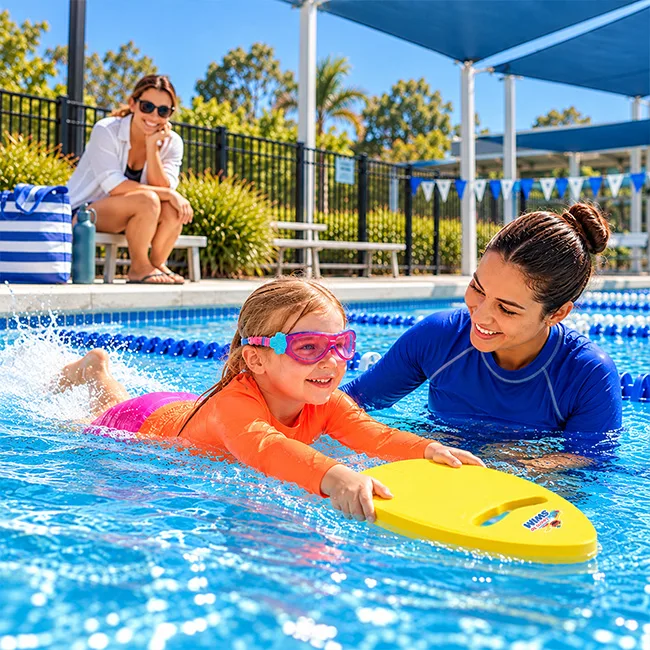
Swimming lessons build valuable skills, but they're not a substitute for supervision. A child who can kick confidently with a board can still get into trouble in seconds. Lessons teach technique, not judgement about depth, currents, or fatigue.
Active supervision means watching without distraction. Put the phone away and keep your eyes on the water rather than glancing over between conversations. Healthdirect Australia advises constant visual contact, with children under five kept within arm's reach, including when they're using a flotation device.
Equipment matters too. Training aids and safety-rated flotation devices aren't the same thing, even when they look similar. The ACCC Product Safety guide recommends checking the manufacturer's age and weight guidance before use, and inspecting for damage each time, since a cracked seam or perished foam changes how a device performs.
Care for Equipment Between Lessons
Chlorine and sun do most of the damage to swim gear, not everyday use. A kickboard that's rinsed and dried properly will outlast one that's tossed straight into a bag.
- Rinse in fresh water after every session. Chlorine left to dry on EVA foam breaks the material down faster and can cause it to flake.
- Dry before storing. UV exposure fades colour and makes foam brittle, and a hot car boot is one of the worst places to leave it.
- Check goggles and swimwear against their care labels. Chlorine-resistant fabric still degrades faster in a hot dryer or with fabric softener.
- Air out the swim bag itself, not just the gear inside it. Damp bags left sealed for a week grow mould, which is harder to clean out than the equipment.
Replace anything cracked, flattened, or no longer holding its shape. Sound equipment that still fits the current stage doesn't need replacing just because a new term has started.
Give Your Child the Right Support in the Water
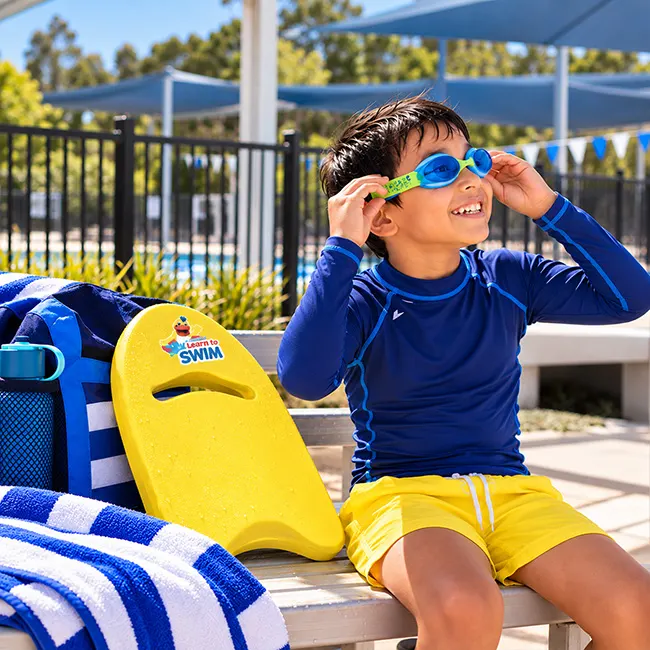
Suitable equipment helps a child take part in the lesson as intended. When a kickboard is comfortable to hold and appropriate for the activity, they can pay attention to the teacher instead of struggling with the board.
It can also bring some consistency to the back-to-school routine. Using familiar, well-fitting gear each week gives your child one less thing to work out as they settle into a new term of swimming.
The aim is not to collect more equipment. It is to choose useful items that support your child’s current learning and help them arrive at lessons ready to participate.
Looking for more children’s swimming equipment? Check out the full Clark Rubber Learn to Swim range.
Not always. Some swim schools provide kickboards, while others ask families to bring their own. Check with the instructor before buying one.
Start with the product’s age guidance, then consider your child’s reach, confidence and height or size. They should be able to hold the board in the required position without stretching or lifting their shoulders uncomfortably.
No. A kickboard is a training aid and should not be relied on to keep a child safe. Children still require active adult supervision whenever they are in or around water.
Yes, provided the activity is appropriate for your child and has been recommended by their instructor. Stay close enough to respond immediately and never allow a child to practise alone.
Follow the product’s care directions, allow it to dry, and store it securely away from the pool. Royal Life Saving Australia advises keeping pool toys out of sight and reach of young children when they are not being used.Top of FormBottom of Form