














How to Clean Pet Urine Stains from Carpet and Remove Odour (For Good!)
By Clark Rubber | 30th October, 2026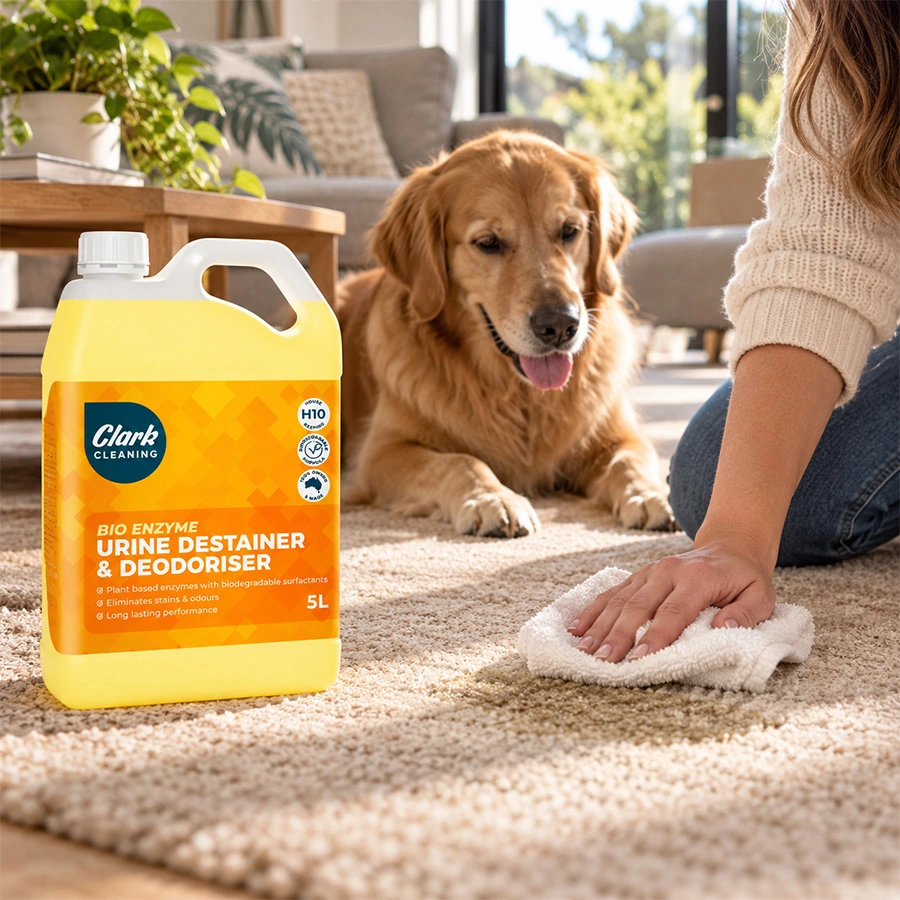
You’ve cleaned the patch and waited for it to dry, but the smell comes back. Pet urine can soak below the visible mark, so a carpet may look fine while residue and odour linger in the fibres or underlay.
The sooner you get to a pet accident, the easier it is to deal with. Start by blotting the spill with a clean cloth or paper towel to lift as much liquid as you can before it spreads.
Once you’ve blotted, a urine-specific cleaner can help break down the residue left in the carpet. Here’s how to treat fresh accidents and tackle stains or smells that remain after cleaning.
Check the Carpet Before Cleaning
Test any cleaner on a hidden patch first. Let the area dry, then check for colour change or damage. Even when a product is listed for use on carpet, the carpet’s care instructions still matter.
An absorbent Oates Microfibre Recycled Cloth can help you blot a small stain, though you may need several dry cloths or paper towels for a larger one. Set aside separate cloths for cleaning and drying so you can see whether more urine is transferring from the carpet.
How to Clean Fresh Pet Urine from Carpet
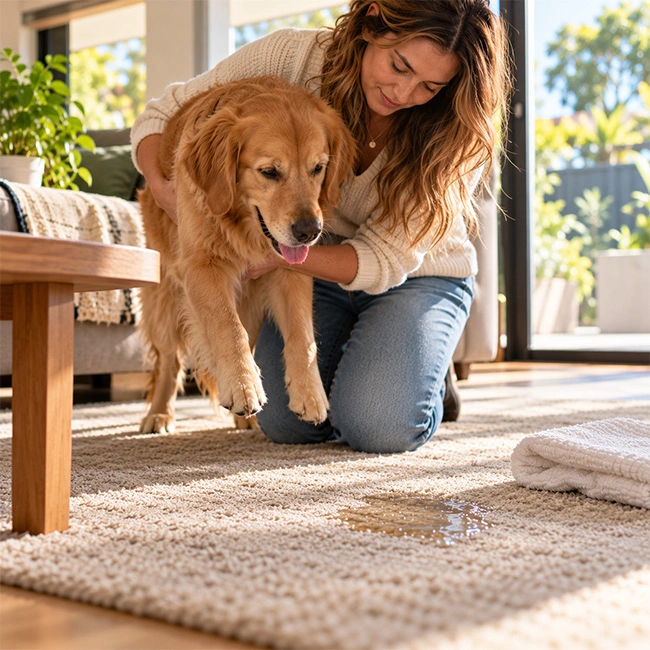
Move your pet away from the area while you clean. If the accident is still wet, absorb as much liquid as possible before applying Clark Cleaning Bio-Enzyme Urine Destainer and Deodoriser. This helps remove the excess urine before treating the residue left behind.
- Blot the wet patch. Press a clean, dry cloth or paper towel onto the carpet. Replace it as it becomes damp, working from the outside of the patch towards the centre. Avoid rubbing, which can spread the liquid and disturb the fibres.
- Check how far it has spread. The damp area may be wider than the visible mark. Look around furniture legs and along skirting boards to identify the area that needs treatment.
- Apply the urine destainer according to its label. Follow the directions for the amount and application method. If there is a strong odour, let the product stand for 5–10 minutes before continuing, avoiding extra liquid that could leave the carpet too wet.
- Blot and dry as directed. Follow the destainer’s directions for any removal or rinsing step and wipe the area with a micro fibre cloth to remove excess product and the stain. Keep pets and foot traffic off the area until it is fully dry, then check for a remaining mark or smell before deciding whether further treatment is needed. Avoid scrubbing, which can disturb the carpet fibres.
Can You Use Vinegar on Pet Urine in Carpet?
Cleaning dog and cat urine from carpet with vinegar is a common home remedy, but it may leave urine residue and odour behind. Using the Clark Cleaning Bio Enzyme Urine Destainer and Deodoriser is a better choice for targeting that residue because the formula breaks down uric acid crystals, helping remove both the stain and the source of the smell. It suits fresh accidents after blotting as well as dried urine stains.
Trying several home remedies on the same patch can leave the carpet wetter and make the result harder to judge. Follow one suitable treatment method like the Clark Cleaning Bio Enzyme Urine Destainer and Deodoriser, then let the area dry fully before checking for any remaining stain or odour.
Why Does the Smell Come Back After Cleaning?
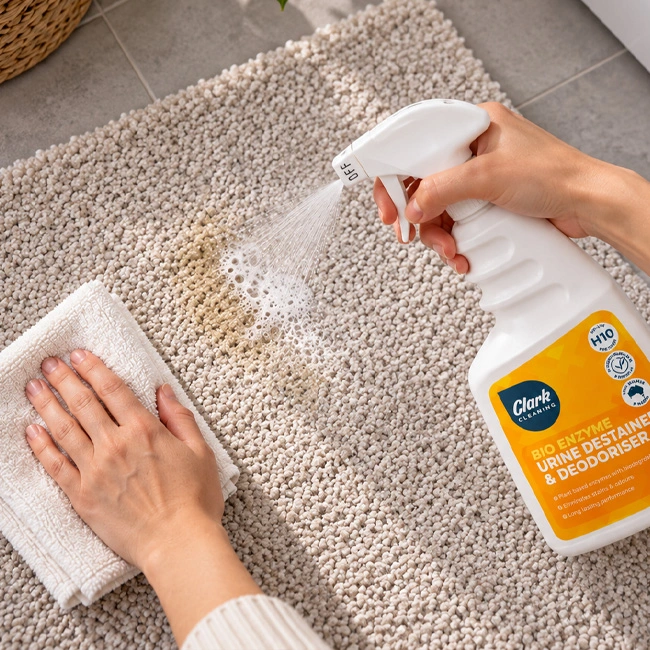
A likely reason is that some urine remains beyond the part you cleaned. Liquid can travel through the pile into the carpet backing or underlay. Cleaning the visible mark may improve the surface without reaching all of it.
A mark can reappear as moisture dries and carries urine residue back towards the surface, a process called wicking. The Clark Cleaning Bio Enzyme Urine Destainer and Deodoriser’s formula targets and breaks down uric acid crystals to help remove both the stain and the source of the odour. Follow the label directions so the treatment can reach the affected area.
Check the areas around the carpet, too. A pet may have urinated against a skirting board, on a rug over the carpet or in a second spot nearby. Cleaning one patch will not resolve an odour coming from another surface. If the smell is strongest in one corner after the carpet has dried, that gives you a useful place to investigate.
Which Clark Rubber Cleaner Fits the Job?
Choose the product based on the surface and the stain you are treating. These products have related uses, but they are not interchangeable for every cleaning job.
Product | Best fit | How it helps |
Fresh or dried urine stains and odours on suitable surfaces such as carpet, rugs, fabric and hard floors | Breaks down urine residue to help remove stains and odours at the source. | |
General organic stains on suitable carpet, rugs and upholstery | Helps treat everyday organic stains and associated odours on soft surfaces. | |
General cleaning on compatible hard floors | Removes organic grime from suitable hard surfaces around pet areas. |
For fresh accidents or dried urine residue, choose the urine destainer. The other cleaners suit general soft-surface or hard-floor cleaning, depending on the mess. Follow the directions for the product and surface you are treating.
Cleaning Urine Stains Beyond the Carpet
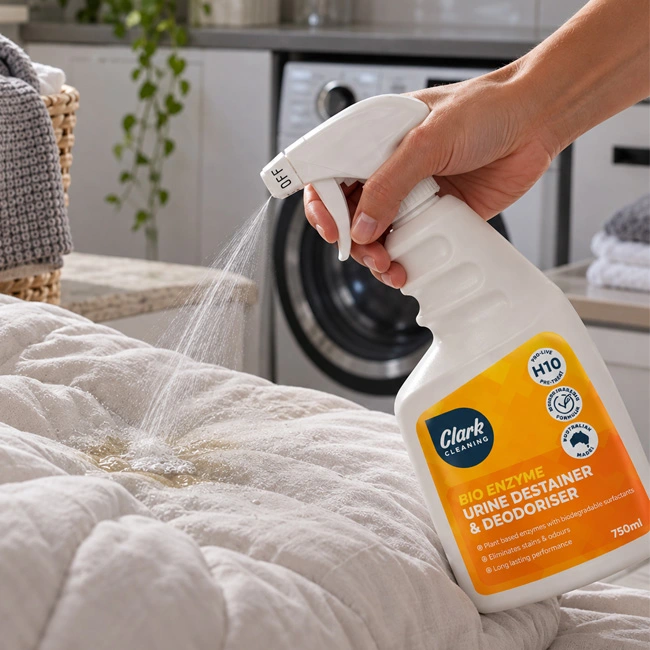
Pet accidents can also leave marks on doona covers or lingering smells in artificial grass. The urine destainer can treat these areas too, targeting urine residue at the source. Follow the product directions and the material’s care instructions, and test a small, hidden area before applying it.
When to Call for Help
If a treated area still smells once it has dried, ask a professional carpet cleaner to inspect it. Tell them where the accident happened, what you have already used and whether the stain has returned. That history helps them assess the backing and underlay without repeating steps that have already failed.
Repeated accidents deserve attention beyond the carpet. Check your pet’s usual toilet routine and speak with a vet if accidents are new, frequent or out of character. Note when and where they happen so you can give the vet a clearer picture.
For other cleaning jobs around the home, find a suitable option in the Clark Rubber cleaning chemicals range.
Some stains lift with prompt, suitable cleaning. Older stains may leave discolouration, particularly if the urine has affected the carpet backing or dye.
Yes, when the residue causing it is treated. The Clark Cleaning Bio Enzyme Urine Destainer and Deodoriser targets that residue at the source to help remove lingering odour.
Urine residue may remain beyond the area you treated or in another nearby spot. The urine destainer targets that residue at the source, though persistent odour from the backing or underlay may need professional assessment.
They may help a small surface mark, but they are less reliable when the stain or smell persists below the pile. Use a suitable urine cleaner according to its directions and seek professional help if the odour keeps returning.
Yes, it can also treat urine stains and odours on artificial grass and doona covers, following the product directions and the material’s care guide. For general cleaning on compatible hard floors, a floor and hard surface cleaner is another option.