
















How to Upgrade Your Outdoor Bench Seat
By Clark Rubber | 8th October, 2026
Picture a slow Sunday lunch, or a few friends staying for one more cup. An outdoor bench seat gives everyone room to settle in to make more space for good times.
When the seat feels hard, looks tired, or has a cushion that never quite stays put, replacement is not always the answer. Often, a practical upgrade is enough to make the bench comfortable again.
This guide begins with the frame, then moves through measuring and cushion choices. You will see which details matter before you spend money or pull the bench apart.
For pre-made options, browse the Aqualuxe outdoor cushions range at Clark Rubber.
1. Start with the bench you have
Before thinking about fabric or foam, check the bench itself. Sit down carefully: does it rock, flex, or shift? Look over the frame and visible fixings, paying attention to splinters and soft timber.
Do not keep using a bench that is unstable or badly damaged. Problems in load-bearing parts call for an assessment by a carpenter or furniture repairer.
2. Decide what the upgrade needs to fix
Comfort might be only part of the problem. Perhaps the old cushion creeps forward, leaves timber exposed, or makes the seat feel cramped. Work out what is bothering you most before choosing materials.
Now consider daily use. A bench for long weekend lunches asks more of a cushion than one used for a quick morning coffee, while an uncovered position changes the care required.
3. Clean and prepare the frame
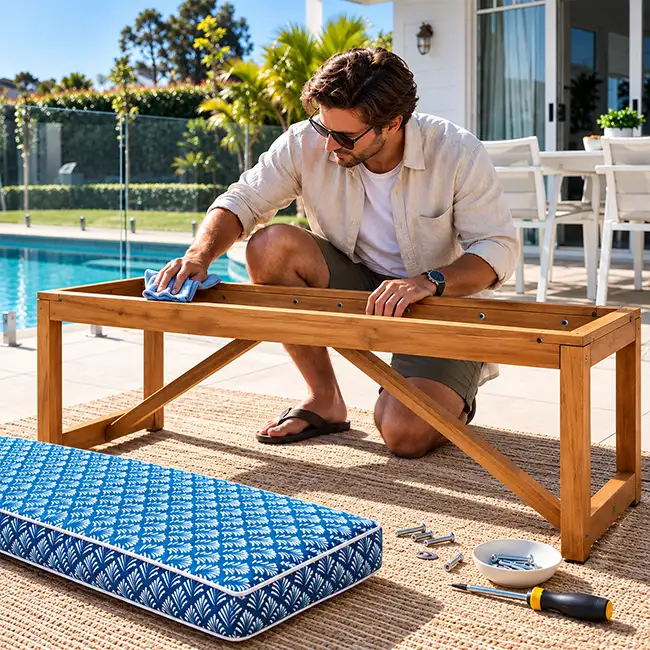
With the cushion removed, brush away loose dirt and inspect the areas it normally hides. Clean the frame in a way that suits the material, following any care directions supplied with the bench.
Give the frame time to dry. Tighten loose fixings where it is safe but replace missing hardware with a suitable match rather than the closest piece in the toolbox.
If a wooden outdoor bench seat has become rough, light sanding may be appropriate. Wear suitable protective equipment and control the dust while you work; Safe Work Australia’s dust guidance covers ventilation and other protective measures. Choose any new coating for the timber, its previous finish, and outdoor use.
Note: Paint will not solve rot or structural damage. Deal with the cause first so the refreshed finish has a sound base.
4. Measure the seat for a better-fitting cushion
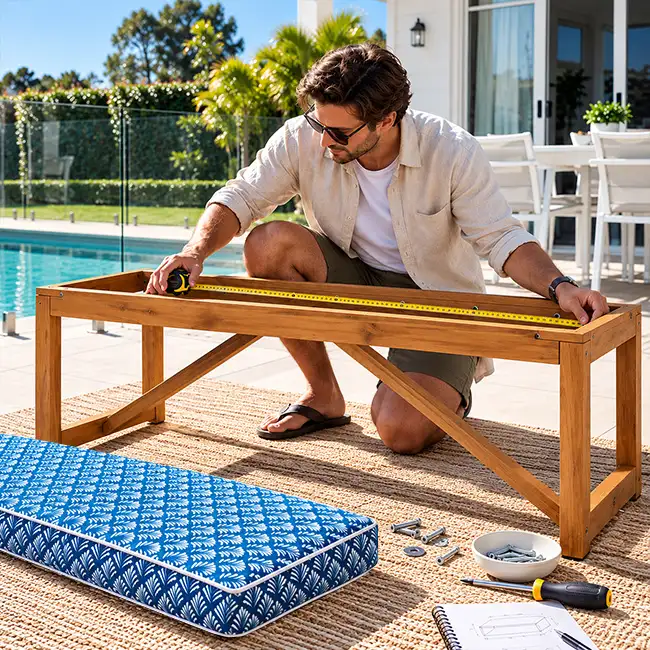
Measure the surface people sit on, not the widest outside edges of the bench. Take the width from left to right, then measure the depth from the front edge to the backrest.
Armrests, upright supports, and angled corners can reduce that usable area. For an unusual shape, a paper template is often clearer than a page of measurements.
Check every figure once more and label the width and depth. Take those dimensions, or your template, when you order custom-cut foam.
5. Allow for how the cushion will sit
A thicker cushion raises the sitting position, which can leave less of the backrest available. Before committing, put a folded towel or an existing cushion on the seat and try it. Notice where your feet land and whether the armrests still feel natural.
Built-in seating needs one extra check: can nearby doors, gates, and storage lids still open freely with the cushion in place?
6. Choose foam around the way you sit
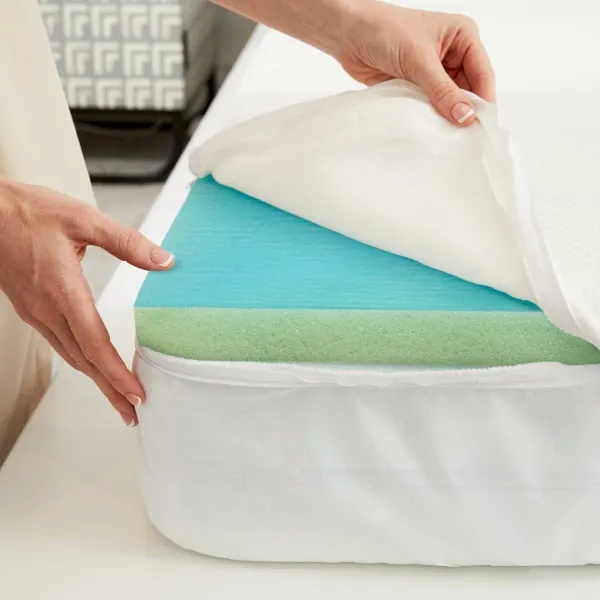
Foam is not a one-size-fits-all purchase. Relaxed seating and a slim pad over timber place different demands on the cushion.
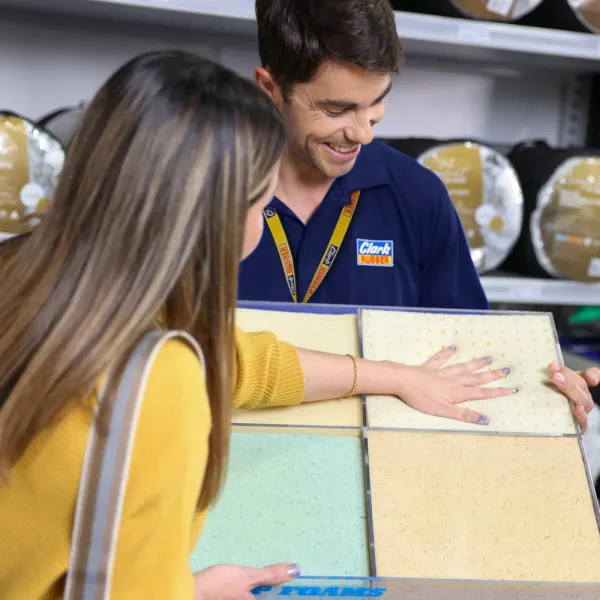
Think about the height your bench can take and how long people sit there. If you can, feel a few foam samples in person; that is more useful than guessing from a description.
More thickness does not automatically mean more comfort. What matters is how the cushion works with the seat height and how much backrest remains once you sit down.
Want a little background before comparing samples? Clark Rubber’s guide to choosing foam for a DIY project explains how the intended use can shape your choice.
7. Choose between a loose cushion and a made-to-order finish
The right option depends on the shape of your bench, where it sits, and how you plan to use the cushion. This quick comparison can help narrow it down.
Option | May suit you if | What to consider |
Loose cushion | You want a cushion that is easy to bring inside for cleaning or wet weather. | Check the dimensions carefully. A poor fit or unsuitable attachment method may allow the cushion to move. |
Your bench is a standard size, or you mainly want extra back support. | Measure before buying. Overlapping cushions are more likely to shift during use. | |
Your bench has an unusual shape, or you want the foam and cover planned together. | Consider the finished height, fabric, and how the cushion will sit against armrests or supports. |
Whichever option you choose, keep the bench’s position in mind. A cushion on an open deck faces the elements more than one kept beneath a covered patio.
8. Choose your cushion covers
The cover shapes everyday upkeep as much as the finished look. Find out how it should be cleaned and whether you can remove the insert without a struggle.
Colour is easier to choose when you look beyond the bench. A tone picked up from the house exterior or a nearby feature can make the seat feel at home without matching every piece of outdoor furniture.
A pattern may hide light marks; a plain cover gives a quieter effect. Either way, read the fabric information rather than judging outdoor suitability by appearance alone.
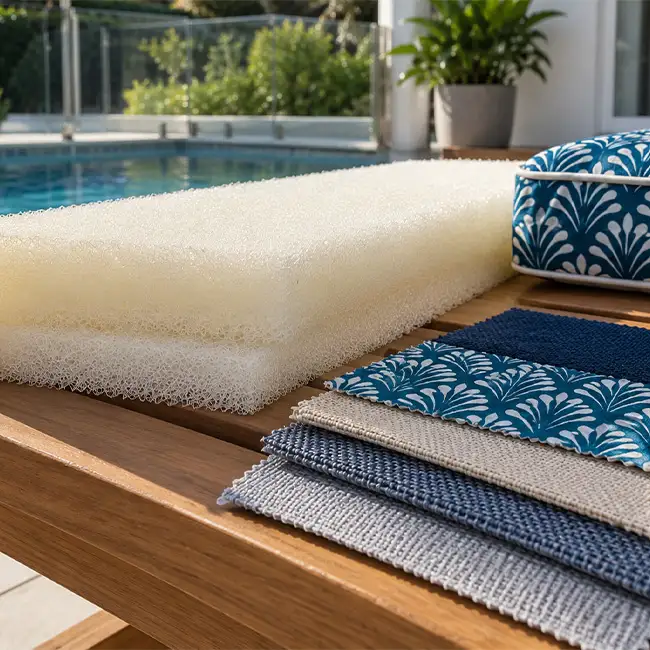
9. Keep the cushion from moving
Few things make a bench feel more makeshift than a cushion that slides forward whenever someone stands up. Get the fit right first. If movement continues, look at discreet ties or a suitable non-slip layer that will not harm the frame.
Keep any fastening simple to release when the cushion needs to come inside. Bulky hardware belongs away from the sitting surface, where it cannot be felt through the foam.
Shelter is not the same as protection from every gust. When severe weather is expected, bring loose cushions indoors or place them in secure storage.
10. Improve comfort beyond the seat cushion
Put the new base cushion in place and live with it for a moment. It may solve the comfort problem on its own.
Still noticing a hard backrest? Add a separate back cushion, but watch the remaining seat depth so it does not push you towards the front edge.
Padding cannot fix every comfort issue. If the bench becomes hot in the afternoon, look at the shade already available and make sure any new structure can be installed safely. Cancer Council Australia explains why UV protection matters even when the day does not feel hot.
11. Look after the upgrade
A quick brush removes loose debris before it settles into the cover. For marks, follow the care instructions, and always let the cushion dry fully before putting it away.
During a long stretch of wet weather, removable cushions are better kept under cover. Storage boxes help only when the cushion goes in dry.
Follow the manufacturer’s directions when cleaning or recoating the frame. Attend to loose hardware early, before movement adds more strain.
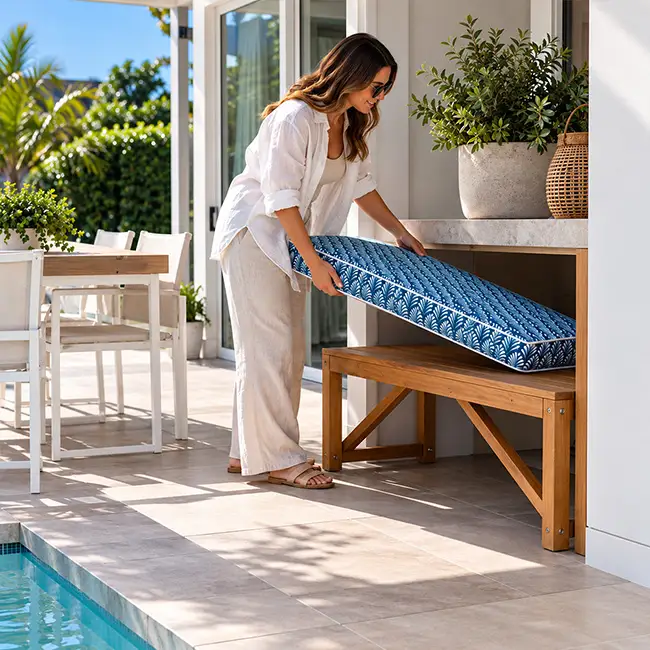
Begin with a safe frame, then measure the usable sitting area. The cushion should suit both the bench and the way your household gathers outdoors.
Want to make your bench more comfortable? Browse Clark Rubber’s full range of outdoor cushions to find an option that suits your seat and space.
There is no universal answer because the cushion size and the feel you prefer both matter. When comparing options, explain where the bench lives and confirm that the foam and cover suit those conditions.
Start with the bench, not an arbitrary number. Check how far the cushion raises you and whether the backrest still supports you; trying foam samples can make the final choice easier.
Measure the flat area available for sitting, taking armrests and angled corners into account. If the outline is irregular, trace a paper template rather than relying on measurements alone.
Yes. Clark Rubber offers custom-cut foam for projects such as bench cushions. Take accurate measurements to your local store and describe how the seat will be used.